YOUR BIOMASS VERTICAL PARTNER

From the first drone pass to the final biochar sink — Saurava Drones supports biomass feasibility, procurement, storage, transport and DMRV-ready reporting for biochar companies and CDR partners.

Biomass Is Only Valuable When You Can See It, Move It and Measure It.

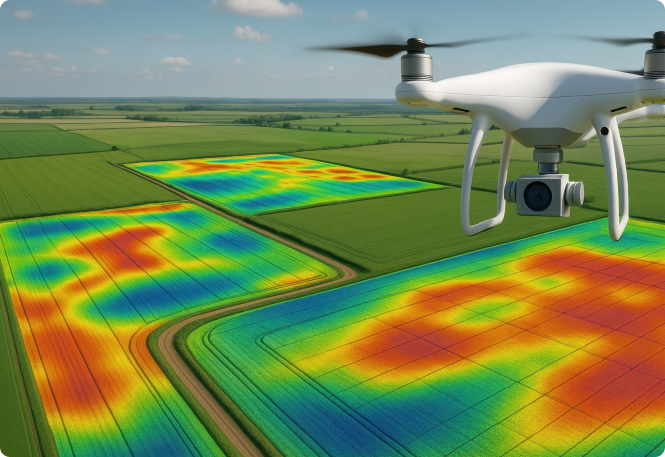
Aerial view of biomass fields

Agricultural residue exists in every region. The challenge is never supply — it is visibility. Without drone mapping to identify availability zones, without organised farmer clusters to create reliable collection, without hub-level storage tracking and structured transport routes, biomass stays scattered. Saurava builds the operating infrastructure that turns field-level residue into a traceable, measurable feedstock stream ready for biochar producers, energy plants and CDR partners.

One Vertical Partner. Every Stage Covered.

  • Feasibility

    Know Your Supply Before You Commit

  • Procurement

    Build the Feedstock Network

  • Storage

    Hub-Level Visibility and Dispatch Readiness

  • Transport

    From Field to Plant and Back Again

Know Your Supply Before You Commit

Every biomass project begins with a question: is there enough residue, in the right locations, accessible at scale? We answer it with data. Our drone mapping and AI analytics capability surveys target geographies to produce a structured feasibility picture before any procurement or logistics investment is made.

What a Feasibility Assessment Covers

  • Biomass-rich zone mapping: aerial identification of agricultural residue concentrations across collection geographies.


  • Residue type and availability: cotton stalks, chilli stalks, lentil stalks, corn cobs and other feedstock categories mapped by season and density


  • Field accessibility analysis: terrain, road access, EV truck routing and collection window timing


  • Cluster viability scoring: which areas can realistically support organized farmer cluster formation


  • Supply risk indicators: regional residue availability mapped to reduce feedstock gaps


  • 3D volumetric stockpile analysis for existing biomass piles


Output

A structured biomass supply chain feasibility report with mapped zones, residue estimates, route options and cluster formation recommendations — ready to inform procurement and logistics planning.

Build the Feedstock Network

Knowing where biomass exists is the first step. Creating a reliable procurement network around it is the work. We coordinate farmer clusters, manage feedstock categories and align collection windows to build a dependable biomass procurement stream that biochar facilities and energy plants can plan around.

What Procurement Coordination Covers

  • Farmer cluster formation: organising individual smallholders and agricultural producers into coordinated collection groups


  • Feedstock category management: segregating biomass types — cotton stalks, chilli stalks, lentil stalks, corn cobs and other agricultural residue — for quality continuity


  • Collection window scheduling: coordinating post-harvest availability with storage and transport readiness


  • Biomass quantity visibility: real-time or near-real-time tracking of anticipated supply volumes before collection begins


  • Agricultural residue monetisation: creating a structured value pathway for farmer communities contributing feedstock to the supply chain


Why It Matters

Unorganised biomass procurement means gaps, inconsistent quality and logistics failures. Organised farmer clusters built on mapping data create predictable, scalable feedstock pipelines.

Hub-Level Visibility and Dispatch Readiness

Collected biomass needs a home before it moves to the plant. Our hub-level storage model tracks feedstock from arrival through stockpiling and preparation to dispatch readiness — maintaining quality continuity, supply visibility and operational flow.

What Storage Visibility Covers

  • Hub-level biomass storage tracking: incoming volumes, feedstock type segregation and stock status monitoring


  • Stockpile management: organised storage of biomass by category to support downstream processing requirements


  • Dispatch readiness indicators: real-time or near-real-time visibility of stock available for outbound transport


  • Storage continuity logic: managing storage cycles to prevent feedstock gaps and reduce spoilage risk


  • Off-grid hub capability and solar integration


The Hub as a Logistics Anchor

Our hubs sit between the farm clusters and the processing plant — aggregating supply from multiple collection points and creating the logistics buffer that smooths out the variability inherent in agricultural biomass collection.

From Field to Plant and Back Again

Movement is where biomass logistics either works or breaks down. We coordinate farm-to-hub, hub-to-plant and plant-to-final-sink transport — with route records, payload tracking and dispatch logs that feed directly into DMRV-ready documentation.

What Transport Coordination Covers

  • Farm-to-hub collection routes: AI-mapped routing based on field accessibility data and EV fleet deployment


  • Hub-to-plant haulage: scheduled bulk movements from aggregation hub to processing facility


  • Plant-to-final-sink logistics: biochar return movements to farms or approved final sink locations, where applicable


  • Payload and movement records: each journey logged with biomass type, quantity, route and timing


  • Delivery status and dispatch tracking: visibility across all legs of the biomass supply chain


Why Records Matter at This Stage

Transport records are not only operational — they are DMRV inputs. Every movement record that captures biomass origin, quantity and destination is a data point that strengthens carbon removal verification for CDR partners.

Measurement & Digital MRV - Supply Chain Data Built for CDR Partners

A biomass supply chain that cannot be measured cannot be verified. Saurava’s operating model is structured from the ground up to produce digital MRV-ready records at every stage — making the full journey from field to final sink auditable for CDR partners, biochar buyers and climate-tech investors.

What Our DMRV-Ready Records Cover

  • Source Location

    GPS-referenced field or farmer cluster origin

    1

    Source Location

    GPS-referenced field or farmer cluster origin

    1
  • Farmer / Cluster ID

    Traceability back to the procurement network

    2

    Farmer / Cluster ID

    Traceability back to the procurement network

    2
  • Biomass Type

    Feedstock category: cotton stalk, corn cob, chilli stalk, etc.

    3

    Biomass Type

    Feedstock category: cotton stalk, corn cob, chilli stalk, etc.

    3
  • Quantity

    Collected and transported volume by movement leg

    4

    Quantity

    Collected and transported volume by movement leg

    4
  • Movement Records

    Farm → Hub → Plant routes, dates and payloads

    5

    Movement Records

    Farm → Hub → Plant routes, dates and payloads

    5
  • Processing Status

    Biomass received at the CDR plant, processing stage and output log

    6

    Processing Status

    Biomass received at the CDR plant, processing stage and output log

    6
  • Biochar Output

    Volume of biochar generated per processing cycle

    7

    Biochar Output

    Volume of biochar generated per processing cycle

    7
  • Final Sink

    Biochar return destination: farm application or approved CDR final sink

    8

    Final Sink

    Biochar return destination: farm application or approved CDR final sink

    8

In Collaboration With

  • Sow and Reap
  • Chara
  • Kosher Climate

Closing the Loop — Circular Biochar Return

At the processing plant, biomass supports energy and gas use while generating biochar as a recoverable, carbon-rich output. Where applicable, that biochar is returned to the farms that supplied the original feedstock — closing the loop and supporting soil health in the process.

The Circular Flow

  1. Farmers supply agricultural residue into the biomass supply chain

  2. Biomass logistics move feedstock from cluster to hub to plant

  3. Plant processing generates energy, gas and biochar as a co-product

  4. Biochar is returned to farms or directed to an approved CDR final sink

  5. Return journey and final sink destination recorded as a DMRV data point

  6. Farmer communities receive a soil-health input from the same waste stream they contributed to